


Let’s be direct: most relocations do not fail because of distance or scheduling—they fail because bulky items were underestimated from the very beginning. Large furniture, oversized appliances, and awkwardly shaped belongings introduce a level of complexity that standard packing advice does not adequately address. This is where many moves go off the rails, even when people assume they are “well prepared.” Experienced GTA movers see this pattern constantly: damaged furniture, strained backs, broken door frames, and last-minute chaos that could have been avoided with proper planning. If you want to pack your bulky things for a relocation efficiently, the process has to start long before moving day, with an understanding of what makes these items fundamentally different from everything else you own.
What counts as “bulky” in a relocation context?
Bulky items are not defined by weight alone. Size, shape, rigidity, and handling difficulty all play a role, which is why many people misjudge what actually needs special preparation. Wardrobes, sectionals, dining tables, refrigerators, washing machines, home gym systems, and even certain electronics fall into this category because they are difficult to grip, hard to stabilize, and often vulnerable to surface or structural damage. When people try to pack your bulky things for a relocation using the same approach they apply to books or kitchenware, problems appear quickly. These items demand different materials, different packing logic, and a much more deliberate handling strategy to remain intact throughout the move.

Why most damage happens during packing, not transport
Contrary to popular belief, trucks and road conditions are rarely the primary cause of damage. The majority of issues occur earlier, during the packing phase, when items are inadequately protected, unevenly supported, or incorrectly secured. Poor packing creates internal movement, pressure points, and exposed surfaces that suffer long before the truck even starts moving. This is why professional packing services Toronto focus so heavily on preparation rather than speed. If you want to pack your bulky things for a relocation without cracks, dents, or functional damage, the goal is to eliminate movement, distribute weight correctly, and protect vulnerable areas before anything is lifted.
Essential packing materials for bulky and heavy items
Packing bulky belongings successfully starts with choosing materials designed to handle stress, friction, and load distribution. Lightweight or improvised supplies often fail under pressure, which is why serious moves rely on reinforced solutions such as plastic moving bins Toronto for items that cannot tolerate box collapse or moisture exposure. When you pack your bulky things for a relocation, the materials you choose directly affect both safety and efficiency.
Core materials that actually make a difference:
- Heavy-duty or double-walled containers that resist bending and tearing under weight
- Moving blankets for cushioning large surfaces without trapping moisture
- Bubble wrap for rigid edges, corners, and protruding components
- Stretch wrap to immobilize doors, drawers, cords, and loose elements
- High-tensile packing tape designed to hold under sustained tension
Using the right materials reduces the need for excessive handling later and lowers the risk of sudden failures during lifting or transport.
Prepare boxes and containers to handle heavy loads
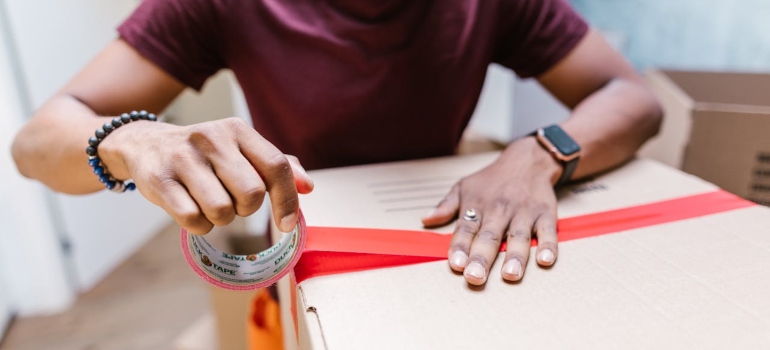
Even the strongest materials can fail if they are not prepared correctly. Containers intended for bulky or heavy items must be reinforced and packed with weight distribution in mind. Smaller boxes are often safer than large ones because they limit load concentration and reduce the chance of collapse. Bottom reinforcement is critical, especially for cardboard containers, and internal cushioning should be layered strategically rather than loosely added. Instead of filling space randomly, padding should stabilize the item from all sides, preventing internal shifting. This preparation step is where many DIY movers cut corners, even though it has a direct impact on both item protection and personal safety during lifting.
How to pack large furniture without damaging it
Large furniture presents a unique challenge because it combines weight, surface vulnerability, and complex shapes. Proper packing begins with partial disassembly, but only where it actually improves stability. Legs, shelves, and detachable components should be removed when possible, while structural frames are usually safer left intact. Hardware should be bagged, labeled, and secured directly to the furniture piece to avoid loss during transit. When you pack your bulky things for a relocation, furniture requires layered protection rather than a single wrap.
Key principles for packing large furniture safely:
- Disassemble only what reduces size or improves balance
- Protect hard surfaces before upholstery to prevent compression damage
- Avoid placing plastic wrap directly on finished wood or delicate surfaces
- Ensure all wrapped items are stable and balanced before lifting
Done correctly, furniture packing minimizes damage risk while making loading and unloading far more controlled. The goal is not just to protect the item, but to make it predictable and manageable throughout the entire move.

Packing appliances the right way
Appliances are often treated as indestructible simply because they are large and heavy, but this assumption leads to some of the most expensive moving mistakes. Internal components, hoses, and electrical systems are sensitive to moisture, impact, and improper positioning. Whether you are relocating locally or coordinating a longer-distance move with movers Calgary, appliance packing follows the same core rules. Everything must be emptied, cleaned, and completely dry before packing begins. Residual water in washing machines, dishwashers, or refrigerators can cause internal corrosion or leaks during transport, while unsecured cords and hoses create snagging hazards.
Positioning is equally important. Some appliances must remain upright to avoid compressor damage, while others require internal components to be immobilized. Doors should be secured with stretch wrap rather than tape to avoid adhesive residue, and padding should protect corners and control vibration rather than simply adding bulk. When people attempt to pack your bulky things for a relocation without respecting appliance-specific requirements, the result is often functional damage that only becomes visible after unpacking.
Special handling for extremely heavy items
Certain items cross the line from “heavy” into “high-risk.” Safes, vaults, stone furniture, and similar objects pose serious injury and structural risks if handled incorrectly. These are not items where improvisation pays off, and attempting to move them without a clear plan can damage floors, stairs, or load-bearing surfaces. Guides such as move a heavy safe on your own exist for a reason: they illustrate how quickly things can go wrong without proper equipment and weight distribution awareness.
When people try to pack your bulky things for a relocation that include extreme-weight items, the key issue is center of gravity. These objects are often compact but disproportionately heavy, making them prone to tipping. Skid boards, industrial dollies, and protective floor paths are not optional accessories in these cases—they are safeguards against injury and property damage. Knowing when to stop and reassess is part of responsible packing.
Packing exercise equipment and oversized gear
Exercise machines combine size, weight, and mechanical complexity, which makes them especially vulnerable during relocation. Treadmills, home gyms, and ellipticals contain tensioned cables, electronic consoles, and jointed frames that do not tolerate sudden movement. When people need to move exercise machines during a relocation, damage most often occurs because internal tension is left intact or moving parts are allowed to shift freely during transport. Simply wrapping these machines without controlling internal stress can lead to warped frames, misaligned joints, or broken electronic components.
Most exercise equipment benefits from controlled, partial disassembly rather than a full breakdown. Consoles and screens should be padded and secured separately, while frames need stabilization to prevent twisting under load. Cables and belts must be relaxed before transport, not locked under tension. This is an area where people consistently underestimate the planning required to pack your bulky things for a relocation, assuming that strength alone is sufficient. In reality, precision and mechanical awareness matter far more than force.
Labeling and inventory control for bulky items
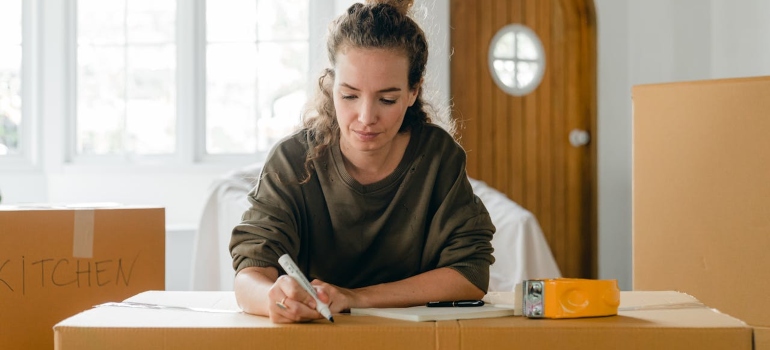
Bulky items require clearer labeling than standard boxes because they influence load order, handling technique, and placement in the new space. Without proper identification, movers may stack incorrectly, orient items the wrong way, or place them in rooms that complicate reassembly. Effective systems such as labeling containers for relocation focus on function rather than appearance. Labels should communicate weight, fragility, orientation, and destination clearly and unambiguously.
Labeling is not an administrative detail—it is a safety measure. Clear instructions reduce unnecessary handling and prevent last-minute adjustments that increase mostly back injury risk.
When professional packing support makes sense
There is a point where effort and risk outweigh savings. This threshold is different for every move, but certain indicators are consistent: high-value furniture, limited time, physical constraints, or items that require specialized handling. When these factors overlap, attempting to pack your bulky things for a relocation alone becomes inefficient and potentially dangerous. Professional support is not about convenience alone—it is about reducing risk, preserving functionality, and maintaining control over the moving process. Knowing when to delegate is part of moving intelligently, not a sign of failure.
Load planning and weight distribution inside the moving vehicle
Packing does not end once bulky items are wrapped and labeled. How those items are placed inside the moving vehicle directly affects their stability and condition upon arrival. Poor load planning allows heavy items to shift, press against lighter belongings, or absorb unnecessary vibration during transit. This is especially problematic for tall furniture, appliances, and irregularly shaped pieces that can act as leverage points when the vehicle brakes or turns. To pack your bulky things for a relocation properly, you must consider how they interact with the overall load, not just how they are individually protected.
Heavy items should be positioned against the walls of the truck, ideally over axles where movement is minimized. Weight must be distributed evenly from front to back to maintain balance and prevent tipping. Bulky furniture should be oriented to create flat, stable planes rather than hollow gaps that invite shifting. Load bars, straps, and padded separators are essential tools, not optional extras. Without a clear load strategy, even well-packed items are exposed to stress that packing materials alone cannot absorb.
Reassembly readiness and post-move inspection of bulky items
The final stage of packing bulky belongings begins before unpacking ever starts. Reassembly readiness is often overlooked, yet it determines how quickly a household returns to normal after relocation. Furniture and equipment should be packed with reassembly in mind, ensuring that hardware, tools, and instructions are immediately accessible. If parts are scattered across boxes or unlabeled bags, delays and frustration are inevitable. When people pack your bulky things for a relocation without considering reassembly, they often create unnecessary downtime in the new space.
Once items arrive, a post-move inspection should take place before reassembly. This allows you to identify surface damage, structural stress, or missing components while everything is still accessible. Appliances should be allowed to rest before use, especially if they were transported at an angle. Furniture joints should be checked for looseness before tightening.
Common mistakes people make when packing bulky items
Many relocation problems stem from predictable errors rather than bad luck. Overloading boxes, skipping padding on “solid” items, and assuming movers will compensate for poor preparation are recurring themes. Another frequent issue is wrapping everything the same way, regardless of material or function. Wood, metal, upholstery, and electronics all require different protection strategies, yet they are often treated identically. Rushing through packing because an item “looks sturdy” is one of the fastest ways to incur damage or personal injury during a move.

Pack your bulky things for a relocation the right way
Packing bulky items is not a test of strength; it is a test of planning, materials, and restraint. The most successful relocations are those where heavy and oversized belongings are treated as systems to be managed. From appliances and furniture to specialty and fitness equipment, the difference between damage and safe arrival lies in preparation. If you approach the process methodically and pack your bulky things for a relocation with intention, you protect not only your belongings, but also your time, your space, and your body.


