


Before searching for reliable moving companies in Downtown Toronto and relocating across the border, you must understand the banking differences between Canada and the US. A few major banks dominate the Canadian banking system, whereas the US has a more diverse banking sector, comprising numerous large national and regional banks. These differences are reflected in various aspects, including regulations, services, and banking options available to consumers and businesses. The Canadian banking system emphasizes a robust regulatory environment that prioritizes stability, whereas the US banking sector often faces a more fragmented regulatory framework across states. Services such as credit cards, mortgages, and savings accounts differ significantly in terms of availability, terms, and offerings between the two countries. Understanding these distinctions is crucial for individuals or businesses seeking financial services or planning to operate across borders, allowing for informed decision-making and smoother financial interactions.
Canadian banking system vs American
The history of banking in Canada and the US differs notably. Canadian banking dates back to early 19th-century chartered banks, shaped by a strong focus on stability and oversight. Over time, Canadian banking regulations have reinforced this foundation, promoting a secure and highly centralized system. In contrast, US banking developed through diverse state-chartered systems in the late 1700s and faced recurring financial crises until federal regulation gained strength in the 20th century.
Structurally, Canada’s system remains concentrated among a few major institutions:
-
Royal Bank of Canada (RBC)
-
Toronto-Dominion Bank (TD)
-
Bank of Nova Scotia (Scotiabank)
These, along with BMO and CIBC, make up the “Big Five,” which control around 90% of the country’s total banking assets.
The major Canadian banks hold a strong market presence, offering services across retail, commercial, and investment sectors. RBC, TD, and Scotiabank also dominate key areas such as mortgages, credit cards, and wealth management. In contrast, the American banking sector is far more fragmented. National banks like JPMorgan Chase and Bank of America operate on a massive scale, shaping consumer and corporate banking alike. This contrast highlights the key differences in structure, regulation, and reach when comparing Canadian banks vs American banks.

Opening a bank account
After moving from Toronto to Florida, opening a US bank account involves specific steps and documentation. Most banks still require an in-person visit and valid identification, such as a passport, Canadian driver’s license, or a US visa or green card. In addition, applicants must typically provide proof of a US address, which can be challenging for non-residents without permanent housing.
One of the biggest banking differences between Canada and the US involves credit history. Canadian credit files do not transfer directly to the US, which can limit access to credit cards and loans at first. However, some banks now review international credit reports or offer credit-building programs to help newcomers establish a US credit profile.
Several major US banks—including Bank of America, Chase, and Citibank—offer services tailored to newcomers. Some provide international banking options, multi-currency accounts, and relocation support. Banks with strong Canadian ties, like TD Bank and RBC Bank USA, also offer cross-border banking programs specifically for Canadians.
Is Canada’s banking system stable?
Canada’s banking system is considered very stable. The country has strong federal oversight and clear rules for all banks. Five major banks—RBC, TD, Scotiabank, BMO, and CIBC—control most of the market. This centralization makes it easier to manage risks. In fact, Canadian banks remained strong even during the 2008 global financial crisis.
The Office of the Superintendent of Financial Institutions (OSFI) oversees all major institutions. Unlike the U.S., where regulation is split between states and agencies, Canada follows one national framework. This structure highlights the difference in stable banks and centralization (US and Canada). Overall, Canada’s banking system remains dependable in 2025.
Banking services and banking differences between Canada and the US
Both countries offer savings and checking accounts, but the terms and features are not the same. In Canada, savings accounts may offer higher interest rates, especially through digital banks. In contrast, US checking accounts often come with more features like extensive ATM access and check-writing. Credit card options also differ. Rewards, fees, and acceptance across borders vary, so it’s smart to compare based on your spending habits and preferences.
When it comes to online banking, both countries rely on modern technology. Canadian banks emphasize secure platforms and privacy. Meanwhile, many US banks provide more advanced digital tools and mobile app features for everyday use.
Deposit protection is also different. In the US, the Federal Deposit Insurance Corporation (FDIC) insures up to $250,000 per depositor, per account category, per bank. In Canada, the Canada Deposit Insurance Corporation (CDIC) protects eligible deposits up to CAD 100,000 at member institutions. These programs give customers peace of mind in case of bank failure, which is especially important when moving from Canada to USA in 2025 and adjusting to a new financial system.

Fees
Banking fees vary among institutions in the US and Canada, but generally encompass monthly, transaction, and ATM fees. Monthly fees for checking or savings accounts may differ based on account type and balance requirements. While transaction fees for excessive withdrawals used to be more common, some U.S. institutions relaxed these during the pandemic. However, many have reinstated them, especially for savings accounts. ATM fees commonly arise when using out-of-network ATMs, with charges varying between banks and countries.
Tips on minimizing or avoiding banking fees:
- Choose fee-free accounts: Opt for accounts that waive monthly fees with minimum balance requirements or those specifically designed for fee reduction.
- Use in-network ATMs: Utilize ATMs within your bank’s network to dodge out-of-network fees.
- Monitor transaction limits: Keep track of transaction limits on savings accounts to avoid excess transaction fees.
- Opt for electronic statements: Some banks waive fees for electronic statements instead of paper ones.
- Maintain minimum balances: Maintain the minimum balance to waive monthly fees on certain accounts, ensuring fee avoidance.
Utilizing these tactics can reduce or even eliminate typical banking fees, helping to conserve funds and manage money wisely. This is especially vital when moving from Toronto to New York, where every dollar matters.
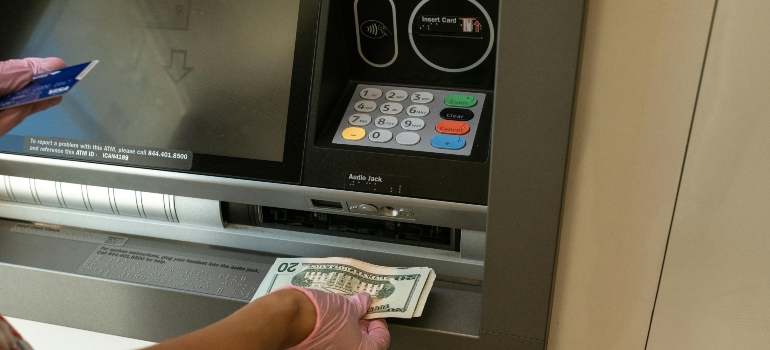
Credit system and scores: A look at the banking differences between Canada and the US
One key difference between Canada and the US is how they handle credit scores. In the US, the FICO score ranges from 300 to 850. Canada uses a similar system, but scores range from 300 to 900, with most people scoring between 660 and 724. While both countries consider payment history, credit use, and credit length, the weight of each factor may differ.
In the US, FICO also looks at new credit and credit mix. In Canada, types of credit used and recent inquiries matter more. High scores in both countries lead to better loan approval odds and lower interest rates. Low scores may result in higher costs or denial.
If you’re moving from Toronto to Miami, understanding these credit systems helps you prepare. It’s a smart step toward building a strong financial footing in your new location.
American banks in Canada
Some American banks operate in Canada, but their services are limited. They usually focus on corporate banking, not everyday accounts. For example, JPMorgan Chase and Citibank offer commercial lending and investment services. However, they do not serve most personal banking needs.
The Canada banking system is more centralized. It has strict regulations and fewer banks overall, making it different from the U.S. model. In contrast, American banks operate under a more fragmented structure with varying state and federal rules.
This difference highlights the contrast between Canadian banks vs US banks. If you’re planning to manage money across borders, it’s important to understand these differences early. That way, you can avoid confusion and make better financial decisions.
Investment and retirement savings amid banking differences between Canada and the US
Investment products like mutual funds, stocks, and bonds are widely available in Canada and the US. Mutual funds pool money from multiple investors to invest in diversified portfolios. Stocks represent ownership in a company, offering potential growth but with higher risks. Bonds are debt securities where investors lend money to entities for a fixed interest rate. Get well acquainted with these differences before moving from Toronto to Tampa.
Retirement savings options
The US offers the 401(k) retirement savings plan, allowing employees to contribute a portion of their salary, often with employer matches. Canada’s equivalent is the Registered Retirement Savings Plan (RRSP), which enables individuals to contribute a portion of their current income with tax-deductible contributions.
Tax implications for investments and savings
Tax implications on investments and savings differ between the US and Canada. In the US, investment gains may be subject to capital gains tax upon sale, and dividends or interest earned might be taxable. Contributions to a 401(k) are often tax-deferred. In Canada, investment income like capital gains and dividends is taxed, while RRSP contributions offer tax deductions, and investment growth within the RRSP is tax-deferred until withdrawal.

Cross-border banking and currency exchange: Understanding the banking differences between Canada and the US
For Canadians in the US, managing cross-border banking means handling currency exchange and transaction fees carefully. Currency exchange plays an important role in this process. Canadian expatriates may face conversion fees when transferring money between Canadian and U.S. accounts. Banks and third-party services offer different exchange rates and fee structures, which can affect the total cost of each transfer. Comparing these options is key to saving money, especially when moving from Toronto to Orlando.
International transfer fees can add up quickly. Canadians living in the U.S. often pay wire fees when moving funds between accounts in both countries. However, some banks reduce or waive these charges for certain account types or higher transfer amounts. Choosing platforms that offer low-cost or free international transfers, especially within the same financial institution, can help cut costs and simplify cross-border money management.
Regulations and consumer protection differences between Canada and the US
Canada and the US possess distinct banking regulations that govern financial institutions. In Canada, banking regulations are overseen by the Office of the Superintendent of Financial Institutions (OSFI), focusing on stability and prudential regulation. Meanwhile, the US employs a multi-tiered system with federal agencies like the Federal Reserve, FDIC, and OCC, along with state-level oversight.
Consumer protection mechanisms
Consumer protection mechanisms also reflect the banking differences between Canada and the US. In Canada, the Financial Consumer Agency of Canada (FCAC) ensures fair treatment of consumers, with a strong focus on clear disclosures and responsible banking practices. In the US, agencies like the Consumer Financial Protection Bureau (CFPB) enforce consumer protection laws to prevent unfair financial practices.

Seeking help in disputes or issues
In case of disputes or issues with financial institutions, Canadians can turn to the Ombudsman for Banking Services and Investments (OBSI) for impartial resolution. In the US, consumers can file complaints with relevant regulatory agencies such as the CFPB or the banking institution’s internal dispute resolution system. If disputes remain unresolved, legal recourse through courts or mediation might also be pursued in both countries. Understanding these options is important for anyone moving from Toronto to Boca Raton, where cross-border banking issues may occasionally arise.
Adapting to the US banking system as a Canadian
When transitioning to the US banking system from Canada, it’s important to understand the key differences and manage your finances carefully:
-
Research US banks: Compare banks based on fees, account types, digital access, and customer service to find the best match.
-
Understand credit scoring: Learn how the US credit system works and how it influences loans, credit cards, and rates.
-
Gather required documents: Prepare a valid ID and proof of residency to open a US bank account.
-
Be aware of tax implications: Understand your tax duties as a Canadian in the US, including dual taxation rules.
Additional tips include:
-
Currency exchange strategies: Monitor rates, consider holding accounts in both countries, or use multi-currency accounts for flexibility.
-
International transfer services: Use platforms or banks that offer better rates and lower fees for cross-border transfers.
-
Budgeting for cross-border transactions: Always consider exchange rates and transaction fees in your financial planning.
-
Seek professional advice: Consult a cross-border financial advisor and connect with expat communities for firsthand tips.
-
Consult regulatory bodies: Contact agencies like FCAC or CFPB to understand your financial rights and protections.
These steps can help you navigate the US banking system more effectively when moving from Canada. You should also review what Canadians need to know about healthcare in the USA to prepare for another critical part of life in the US.

Explore banking differences between Canada and the US to ensure a stress-free move!
Understanding the key banking differences between Canada and the US is crucial to getting used to life in the States. Don’t rush, and ensure you fully understand your financial situation after moving from Canada to the US. Getting a handle on these differences will help you navigate your finances more confidently and effectively in your new home. This understanding is essential for a smooth and seamless transition to living in the United States.


